

Social Media & SEO: What Actually Matters in 2026
Why the old debate is outdated and what drives discovery today
Let's Be Honest: Most SEO Advice on Social Media Is Outdated
If you're still asking "does social media affect SEO?" in 2026, you're asking a question that expired years ago.
And you're not alone. The industry has been repeating the same safe answer for over a decade: "Social signals don't impact rankings, but social media helps indirectly."
That's not wrong. But it's no longer enough. Because search itself has changed.
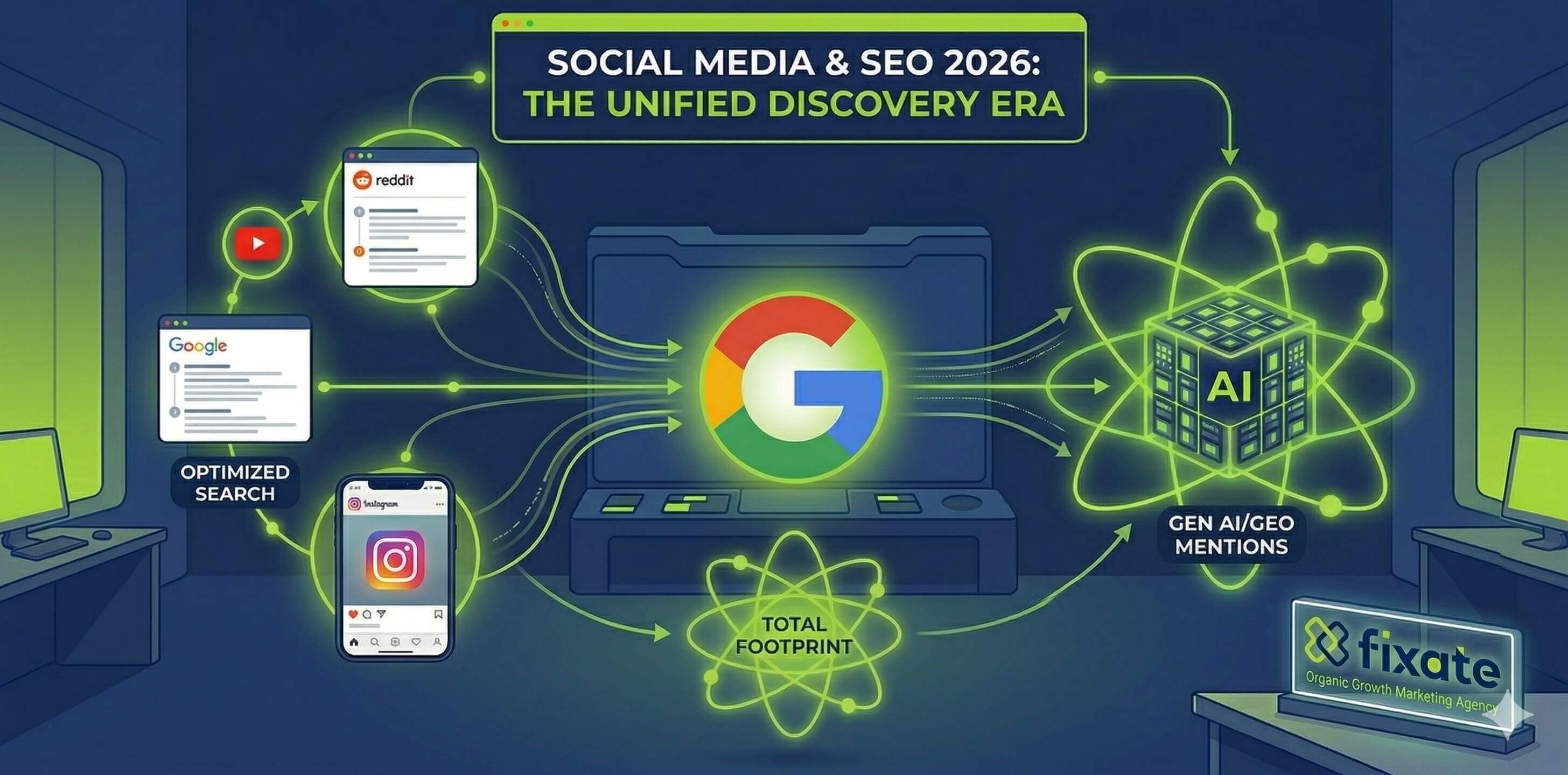
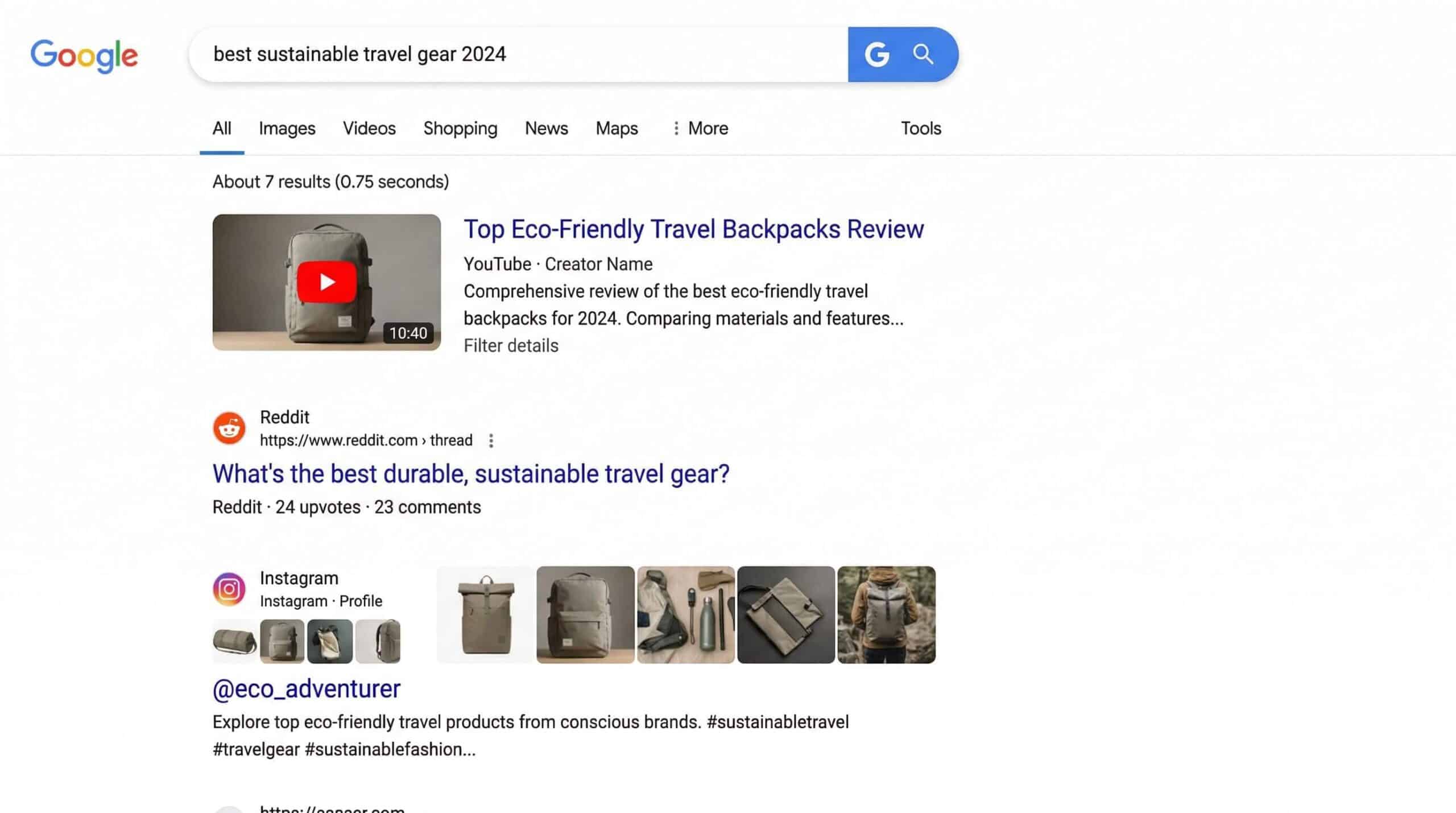
Google is indexing Instagram content. Reddit threads are outranking brand websites. YouTube dominates product and how-to queries. AI tools like ChatGPT and Gemini pull from social discussions.
The line between social media and search hasn't blurred — it has disappeared.
So the real question isn't "Does social media impact SEO?"
The real question is: Is your brand visible everywhere your audience is searching — or just on Google?
Discovery Has Changed (And Most Brands Haven't)
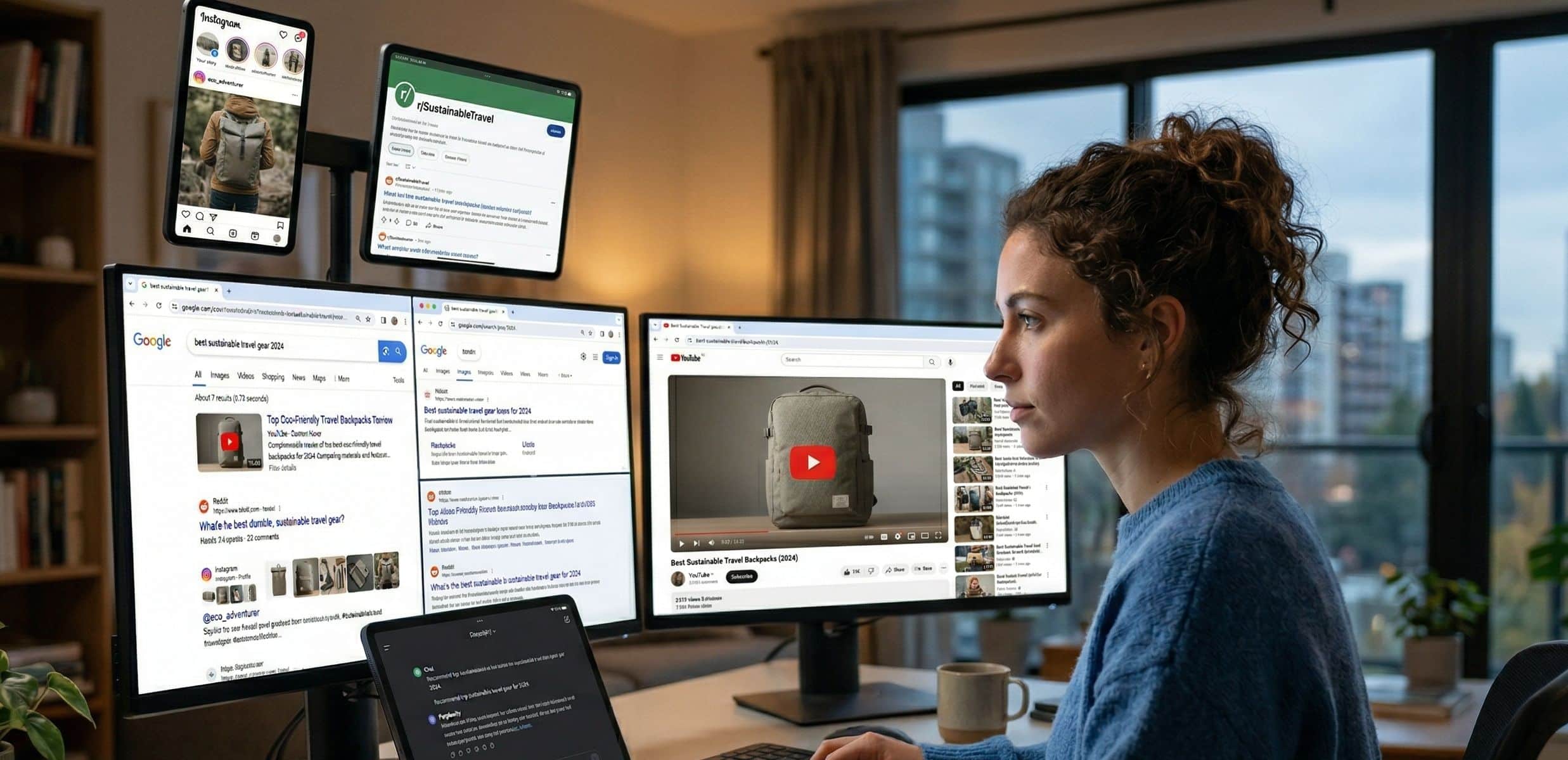
Discovery today is not linear. A typical buyer journey now moves across platforms before a single Google query is made.
Google is no longer the starting point. It is often the confirmation layer. This changes how SEO should be approached entirely.
At Fixate, we don't optimise just for rankings. We optimise for Search Everywhere Optimization — visibility across search engines, social platforms, AI systems, and community channels.
If your content only exists on your website, you are invisible to half the internet.
The Myths That Need to Stop Being Repeated
SEO is a domain where misinformation circulates as freely as best practices. Here's what the data actually says — not what blog recyclers have been copying from each other since 2015.
Social Signals Improve Google Rankings
The claim: Likes, shares, and followers directly impact rankings.
The reality: Google does not use social signals as direct ranking factors. This has been confirmed repeatedly. Content performing well on social often performs well in search — not because of likes, but because it is substantive content that resonates with real user intent.
Search engines don't rank likes. They respond to demand, behaviour, and relevance. Correlation is not causation — and conflating the two leads to wasted effort.
Social Media Links Build Backlinks
The claim: Posting links on social improves domain authority.
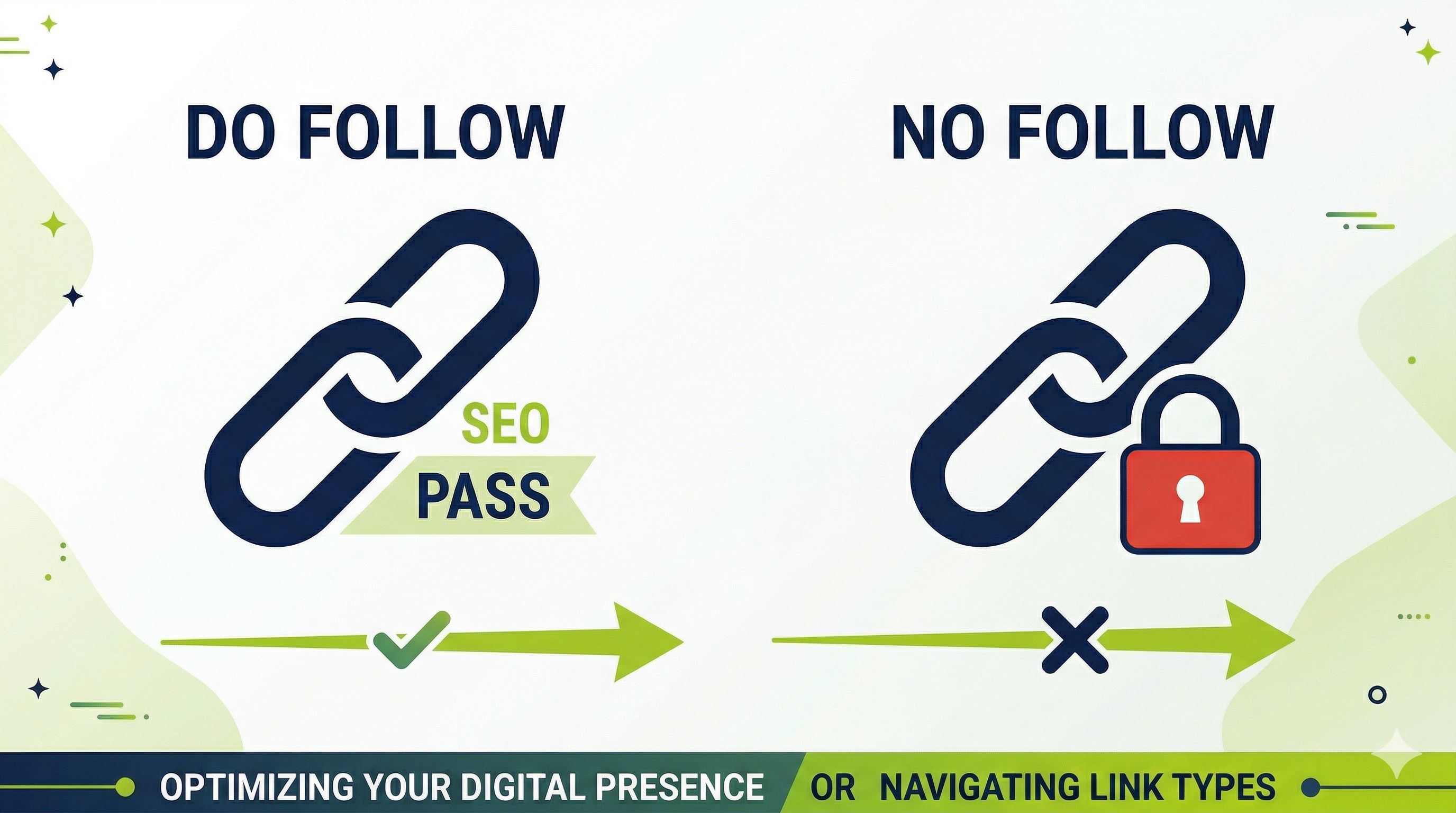
The reality: Most social links carry the nofollow attribute and do not pass link equity. What social actually does is create visibility — and that visibility can lead to real editorial backlinks from journalists, bloggers, and industry sites who discover your content through social distribution.
Social is not link building. It is link discovery. The distinction matters for how you allocate resources.
More Shares = Better SEO
The claim: Viral content ranks better.
The reality: Virality and rankings operate on fundamentally different systems. A meme can go viral with zero search value. A niche guide can rank for years with minimal social engagement. These are different engines with different fuel.
SEO rewards depth and intent. Social rewards attention. The overlap between the two is where compounding growth happens — but they are not interchangeable.
Social Media and SEO Are Separate
The claim: SEO is for websites, social is for engagement.
The reality: This organisational model is outdated. Instagram posts are indexed by Google. Reddit threads rank in the top three for competitive queries. YouTube videos dominate SERPs. LinkedIn content appears in AI-generated answers.
Social content is now part of search results. If your teams are working in silos, your visibility is also siloed.
Social Profiles Don't Need Optimisation
The claim: Social profiles are just branding assets.
The reality: They rank. They influence perception. They drive traffic. Your LinkedIn page, Instagram profile, and YouTube channel are often your first search result when someone looks up your brand name.
Your social profiles are no longer optional branding assets. They are search assets — and they need to be optimised with the same rigour you apply to your website.
What Social Media Actually Does for SEO
Strip away the myths, and the relationship between social and search becomes clear — it's about demand creation, authority building, and distribution at scale.
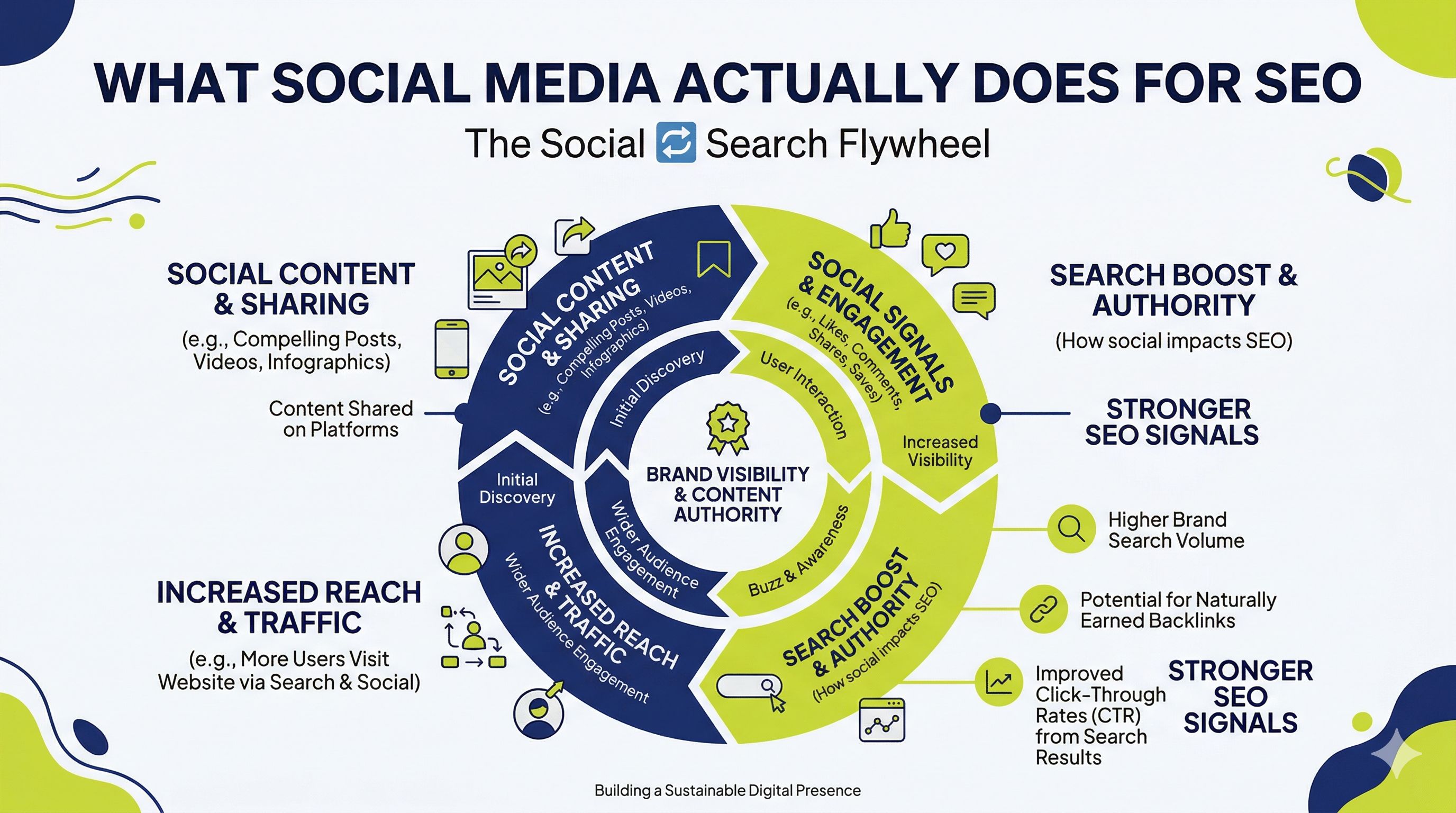
Drives Pre-Search Discovery
People discover your brand before they search for it. This leads to higher branded searches, stronger click-through rates, and better trust signals in SERPs. Visibility before search creates advantage within search.
Builds Brand Authority
Repeated exposure across platforms increases recall, builds credibility, and influences decisions. SEO is no longer just about ranking — it's about recognition. When users see your brand across multiple touchpoints before clicking a search result, conversion rates follow.
Accelerates Content Distribution
Research-backed content without distribution is invisible. Social helps reach new audiences, generate engagement, and create momentum that search engines eventually reflect in their rankings.
Powers AI Search Visibility
AI tools don't rely exclusively on websites. They pull from blogs, forums, and social discussions. If your brand isn't present across platforms, it won't surface in AI-generated answers. This is where Generative Engine Optimization (GEO) becomes critical.
Speeds Up Indexing and Discovery
Content shared on social gets crawled faster and receives early engagement signals. This is especially critical for new websites and early-stage brands that haven't yet built domain authority through traditional channels.
Social Platforms Are Search Engines Now
This is the structural shift that most brands and agencies have been slow to internalise.
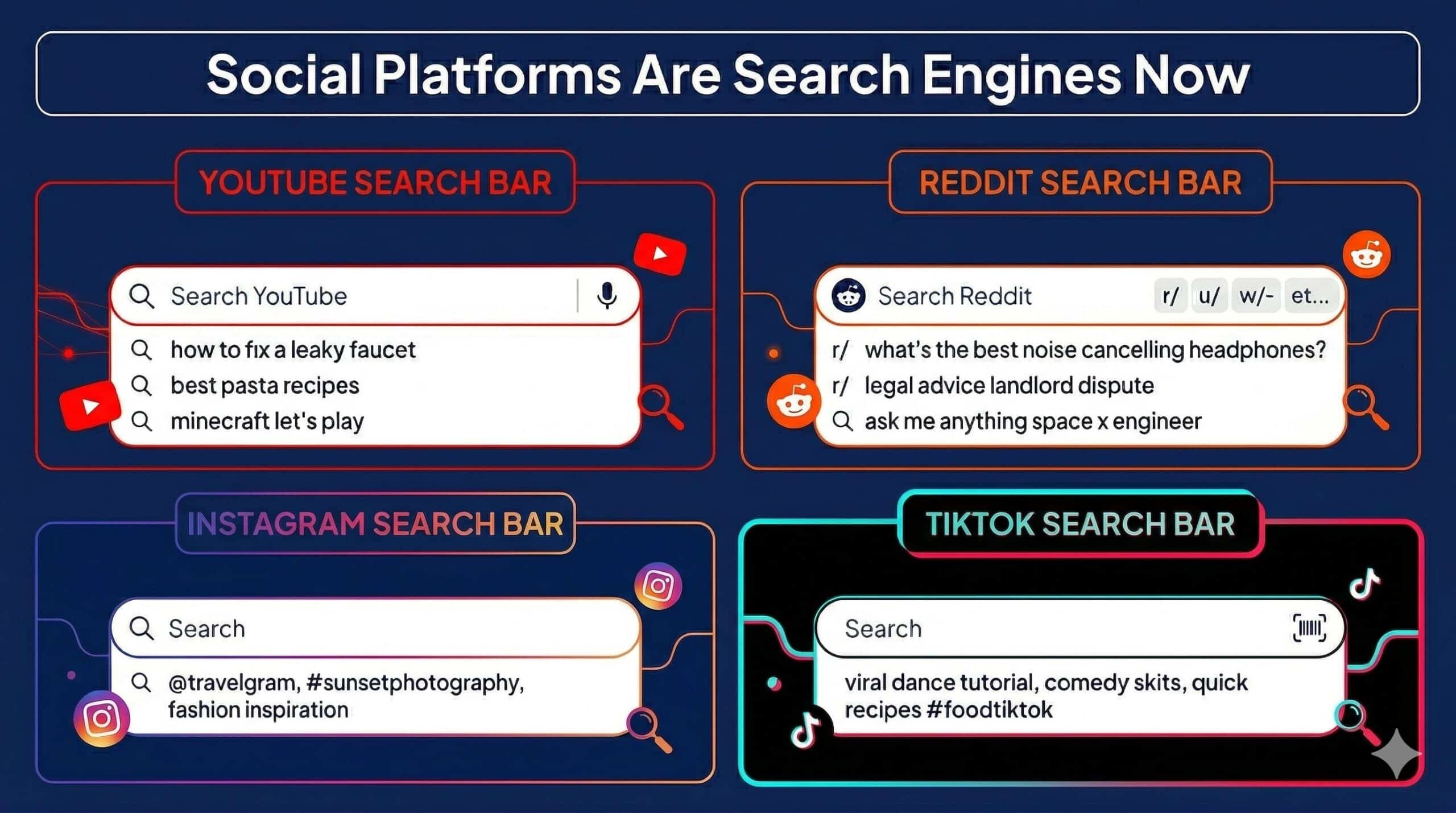
YouTube, Instagram, TikTok, and Reddit are not just social networks. They are search engines with their own algorithms, their own ranking factors, and their own content quality signals.
Users actively search these platforms for reviews, comparisons, tutorials, and recommendations. The intent is identical to Google — the venue has simply expanded.
If you are only optimising for Google, you are optimising for just one search engine in a multi-engine world.
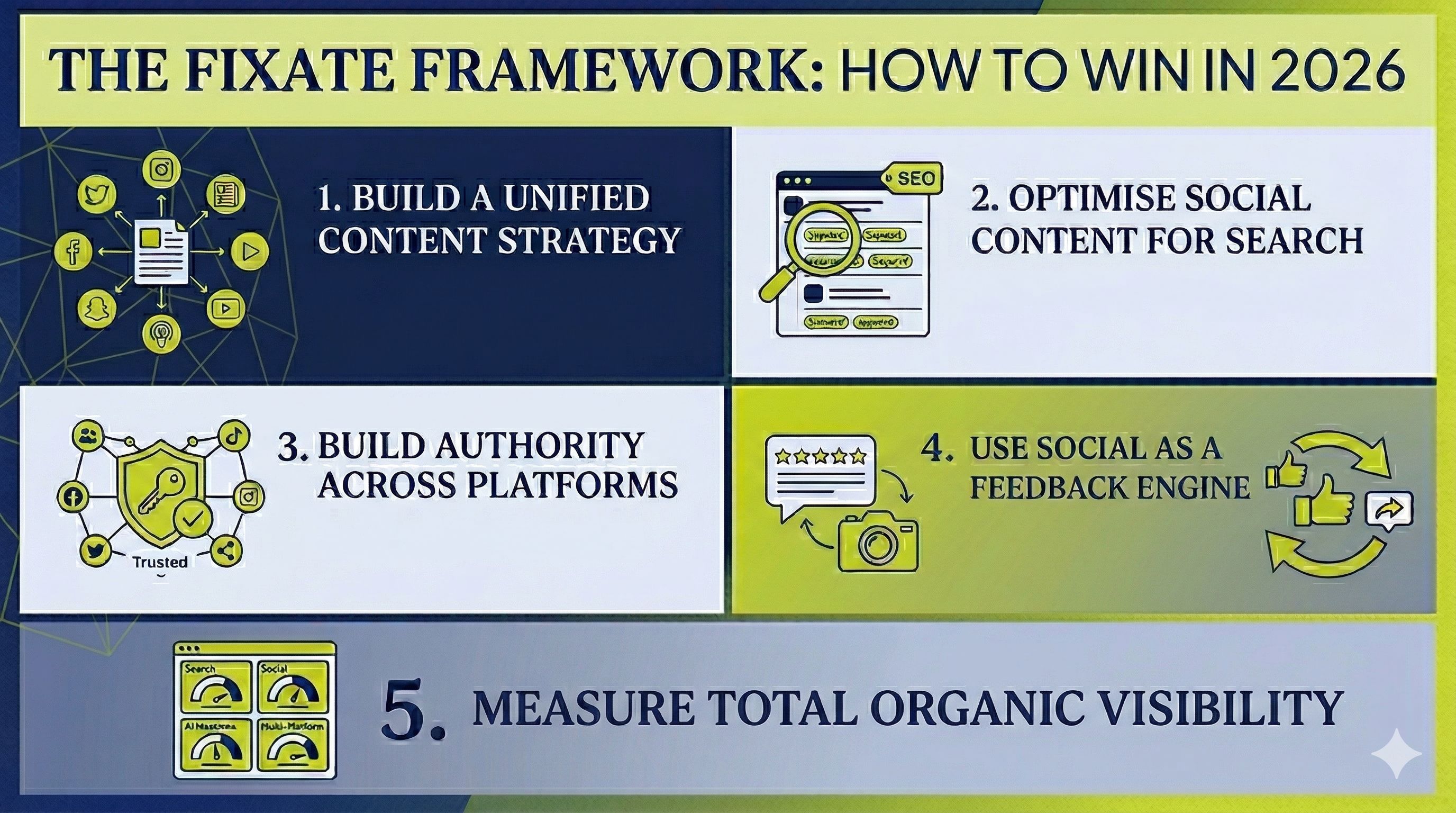
The Fixate Framework: How to Win in 2026
Tactical execution without a framework produces scattered results. Here's the structured approach we apply across ecommerce, real estate, and B2B SaaS clients.
Build a Unified Content Strategy
One idea, multiple formats. A single research-backed topic should produce a blog post, a LinkedIn article, an Instagram carousel, and a YouTube explainer. The insight is the asset — the format is the distribution layer.
Optimise Social Content for Search
Keywords in captions, clear structure, context-rich content. Every piece of social content should be created with search intent in mind — not just engagement bait.
Build Authority Across Platforms
Consistency creates topical authority, entity recognition, and trust. Search engines and AI systems are increasingly connecting entities across platforms.
Use Social as a Feedback Engine
Your audience tells you what works, what they care about, and what to build next. Social engagement data is primary research — treat it as an input into your content and keyword strategy.
Measure Total Organic Visibility
Track branded search volume, social traffic, AI mentions, and multi-platform presence. Not rankings alone — but your total discovery footprint.
Frequently Asked Questions
Q] Does social media affect SEO rankings?
A] Not directly. Google has confirmed that social signals (likes, shares, followers) are not ranking factors. However, social media significantly impacts discovery, traffic, branded search volume, and the likelihood of earning editorial backlinks — all of which influence organic performance.
Q] Can Instagram content appear on Google?
A] Yes. Since July 2025, Google has been indexing public posts from Instagram professional accounts including photos, Reels, carousels, captions, hashtags, and alt text. Your Instagram content can now surface in Google Search and potentially in AI-generated results.
Q] Do social media links count as backlinks?
A] No. Most social platform links carry a nofollow or ugc attribute and do not pass link equity. However, social distribution creates visibility that can lead to genuine backlinks when journalists, bloggers, or industry professionals discover and reference your content.
Q] Should I focus on SEO or social media?
A] In 2026, this is a false choice. SEO and social media are converging — Google indexes social content, social platforms function as search engines, and AI tools pull from both. The most effective approach is an integrated organic strategy where content is created for intent, distributed across platforms, and optimized for discovery everywhere your audience searches.
Q] How does social media affect AI search like ChatGPT and Gemini?
A] AI-powered search tools pull information from a broad ecosystem that includes social media content, forum discussions, and community platforms. A consistent, authoritative social presence increases the probability of your brand being referenced in AI-generated answers. This is part of the emerging discipline of Generative Engine Optimization (GEO).
Q] Can social media help with local SEO?
A] Yes. Consistent NAP (Name, Address, Phone) information across social profiles, customer reviews and check-ins on platforms like Facebook and Instagram, and geo-tagged content all reinforce local relevance signals. Social profiles also frequently appear in local search results alongside your Google Business Profile.
Q] What type of content works for both social media and SEO?
A] Content built around genuine user intent works across both. This includes in-depth how-to guides, data-backed insights, original research, expert analysis, and visual content like infographics and video explainers. The key is starting with what your audience is searching for and creating content that addresses that intent in the format best suited to each platform.
The Bottom Line: Stop Debating. Start Integrating.
Social media does not directly impact rankings. But rankings are no longer the full picture.
Google is indexing social content. AI is using social signals for answer generation. Discovery happens before search — and increasingly outside of Google entirely.
If your strategy is still website-first, you're optimising for the last step of the journey.
The brands that win today are not just ranking better. They are showing up everywhere their audience is already looking.
Isha is an organic growth strategist with over two decades of experience in search, content, and digital discovery. As the founder of Fixate, she helps brands grow through thoughtful, insight-led organic marketing strategies built for today’s evolving search landscape. Her writing explores SEO, audience behavior, AI-driven discovery, and the shifting dynamics of how brands earn visibility, trust, and relevance.